
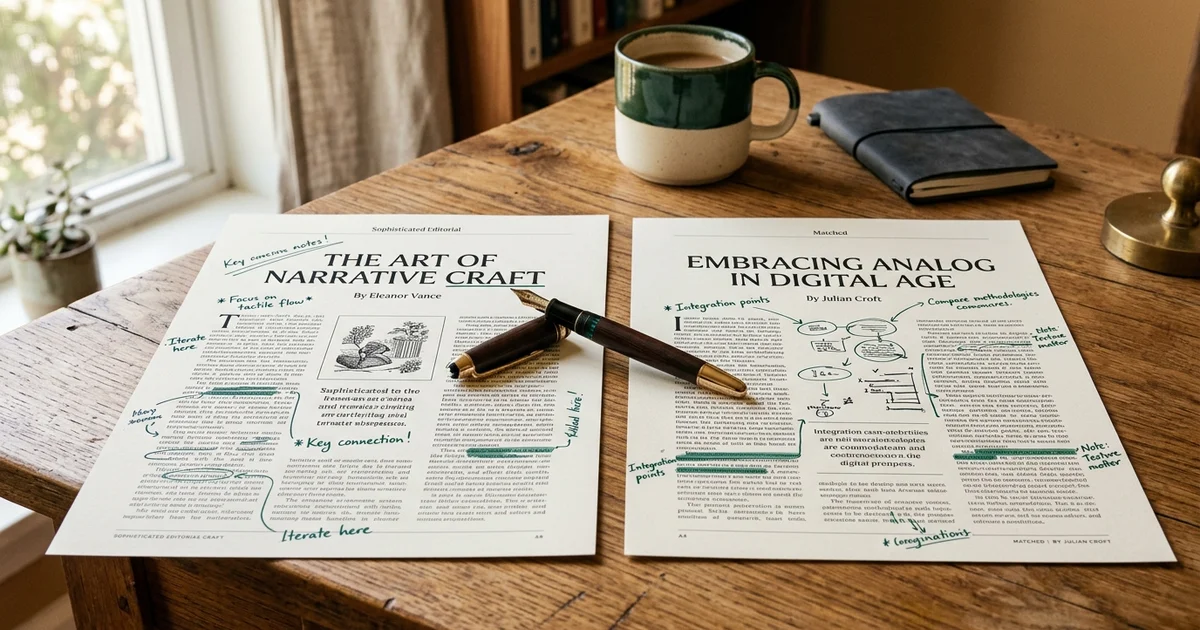
We hear the same question from US business owners every week regarding content marketing costs. Many leaders want to know if paying top dollar for completely original writing actually generates a positive return.
It is a valid concern.
Our team at Content Geeks bridges the gap between scalable digital publishing and high-touch editorial quality, built on a foundation of native English craftsmanship. This experience has shown us that AI is now just the baseline. A 2026 HubSpot report reveals that 80% of marketers use AI for content, making a distinct brand point of view the only real differentiator.
We are going to break down the actual financial differences between human vs hybrid content writing. Let’s explore what the data says and map out a practical allocation strategy for your business.
The Comparison
| Hybrid | 100% Human | |
|---|---|---|
| Rate per 1,000 words | $80 to $180 | $180 to $400+ |
| Standard delivery | 5 days | 8 days |
| Rush available | Yes, 48 to 72h (+50%) | No |
| Who writes it | AI draft, native editor rewrite | Veteran journalist, blank page |
| Original research | Limited | Yes, including interviews |
| Fact-checking | SME pass | Primary sources and citations |
| Best for | Most commercial content | Flagship and authored pieces |
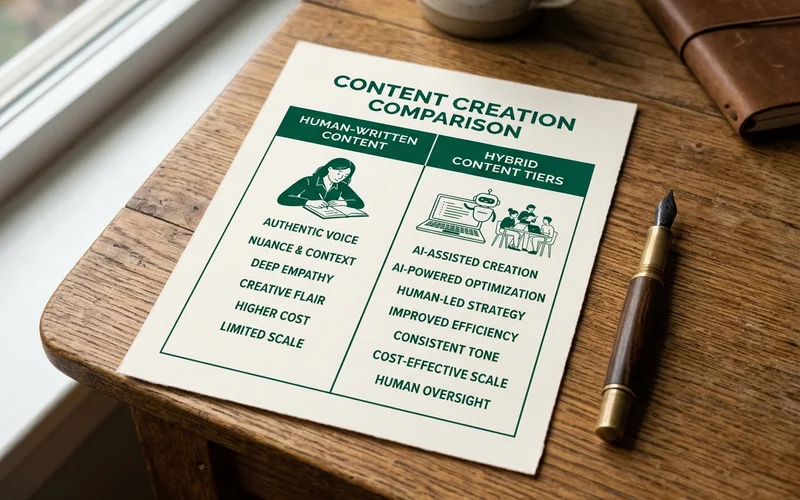
You might be wondering, is human content worth it? We know that both tiers come off the same editorial desk, so the quality floor is identical.
The ceiling is different, and so is the price. Our 100% human-written content page covers the premium tier in detail.
According to 2026 pricing data from FreeUp, pure AI content can drop below $0.01 per word in the US market. Adding a professional human editor pushes that hybrid rate to around $0.03 to $0.10 per word.
Our internal data aligns with this, showing how hybrid models maintain affordability while checking for accuracy using tools like Originality.ai. Fully human-written pieces from experienced US professionals easily command $1.00 or more per word.
What the Premium Actually Buys
When analyzing hybrid vs human quality, the honest answer is not “better writing”. A good hybrid piece is still very well written.
This premium investment buys three things a hybrid model structurally cannot provide. We see clients succeed when they actively use these distinct advantages.
Information that did not exist before. Original research attracts high-value links. A 2026 analysis of US marketing data shows that long-form content ranks higher when supported by unique data gathering.
Editing an AI draft cannot add facts nobody collected. We prioritize primary documents and direct interviews to build this solid foundation.
An argument rather than coverage. A seasoned journalist builds a specific claim and actively defends it. That structural approach makes a piece worth citing in major US publications.
Our writers craft arguments that make an article worth reading twice.
Authorial voice. This distinct perspective makes executive content feel like a real person rather than a faceless brand. Readers connect with a sustained, authentic voice.
We help founders project their unique viewpoints consistently across an entire piece.
Where Hybrid Is the Better Buy
Use the hybrid tier for:
- Service and category pages
- Comparison and cost pages
- Local and service-area content for Google Business Profile updates
- Supporting articles that need real accuracy and voice
- Anything on a five-day or shorter schedule
That covers most of what local and mid-sized businesses publish. Buying the premium tier for these pages does not make them rank better.
It makes the calendar unaffordable, which causes content programs to quietly stop. We recommend hybrid approaches for high-volume needs.
A 2025 TechGuru ROI comparison found that AI-assisted hybrid posts cost 75% less and shipped four times faster than traditional methods. This efficiency is crucial for local business owners competing in tight US markets.
The budget failure to avoid
Spending your entire quarterly budget on two flagship pieces and publishing nothing else. Topical authority needs coverage. One brilliant page does not build a cluster.
Where the Premium Pays
Use 100% human writing for:
- Founder, executive and personal-brand pieces
- Original research and data stories
- Thought leadership with a defensible position
- Anything regulatory, medical, financial or legal where citation quality matters
- Pieces you hope a trade publication like Forbes Business Council will pick up
Most businesses have three to six of these a year. That is the exact right number. Our guide on when to choose 100% human-written content walks through how to identify which pieces on your calendar qualify.
We find that a few high-impact pieces generate massive returns. A 2026 Column report highlighted that almost 60% of B2B decision-makers awarded business directly because of strong thought leadership content.
Our premium clients use these flagship articles to build deep trust. Readers want authentic human insight, especially as AI-generated text floods the internet.
A Simple Allocation Model
Take your annual content budget and split it deliberately:
- 60 to 70 percent on hybrid, covering the working content that drives enquiries
- 15 to 25 percent on the AI tier, covering cluster breadth cheaply
- 10 to 20 percent on 100% human, covering the three to six pieces that carry your name
Adjust the shares to your situation, but keep all three in the mix. The tiers exist so you can vary the spend page by page.
This flexibility is the entire point of not being on an all-or-nothing agency retainer. We structure our services this way to match actual market behavior.
The Content Marketing Institute reported in 2026 that 52% of B2B marketers plan to increase their investment in thought leadership. Our strategy ensures you have the budget to fund those big ideas while maintaining everyday visibility.
You can easily track the traffic volume from your hybrid pages using Google Analytics 4 to confirm your baseline is growing.
Conclusion
We hope this breakdown clarifies the true value of both writing tiers. Your budget should work efficiently to build both daily traffic and long-term industry trust.
Take a moment to review your publishing calendar for the next quarter. We suggest identifying those three to six flagship topics right now, so you can allocate your resources before the busy season begins.