

The Fit Criteria
Our fully AI content writing tier is the right choice when all three of these are true.
1. The stakes are low. Nobody is making a purchase decision on this page. It exists to answer a simple question or complete a topic cluster.
2. Volume matters more than nuance. You need twenty pages this month, not two perfect ones. Content velocity is the constraint.
3. Accuracy risk is low. The subject does not involve regulation, health, money, or technical specifications where a confident wrong sentence creates a real problem.
If any one of those fails, move up a tier. We would rather tell you that before you order than after.
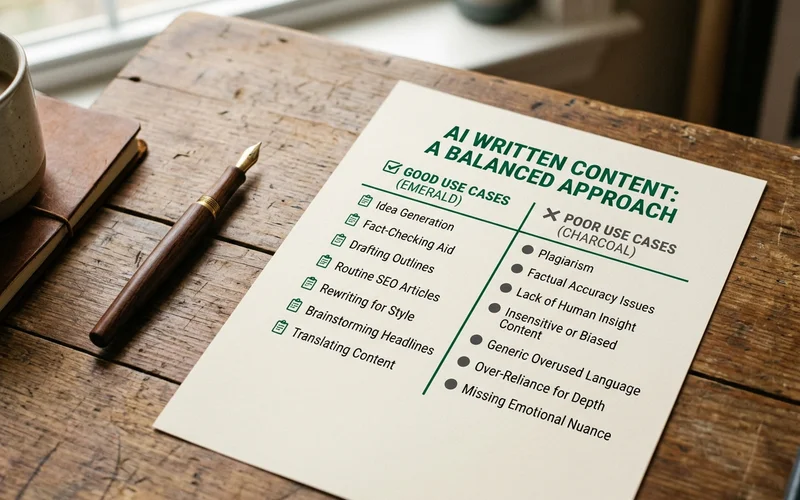
Good Use Cases
- Supporting articles in a cluster. The eight explainer pages that make your hub page rank as part of a complete resource.
- Glossary and definition pages. Straightforward, factual, and rarely read closely.
- Routine service descriptions. Especially for secondary services that need coverage but do not drive revenue.
- First drafts for internal development. Some teams buy the AI tier purely as a structured starting point their in-house writer then develops.
- Content refresh raw material. Updating twenty stale posts is more affordable when the first pass is automated.
Poor Use Cases
- Your main service pages. These carry the enquiry. They need a native editor.
- Comparison and cost pages. Prospects read these carefully and spot vagueness immediately.
- Anything regulatory, medical, financial, or technical. The AI tier has no fact-checking pass. That is a pricing decision, not an oversight.
- Thought leadership. A model has no position to argue, and a piece without one reads exactly like that.
- Local pages that need to sound local. Generic phrasing undermines the entire point of a service-area page.
The one-sentence test
If a wrong or vague sentence on this page could cost you a sale or a client’s trust, it needs a human in the loop.
Where the AI Tier Falls Short
Two specific gaps, worth naming plainly.
No experience signals. A model can describe a process accurately and still miss the detail a practitioner would consider obvious. That specificity is what search quality raters recognise as genuine expertise, and it is the main thing our editors add.
No verification. AI drafts state things confidently whether or not they are correct. At $30 to $80 per article there is no SME fact-checking pass, which is fine for a definition page and unacceptable for a compliance explainer.
The Upgrade Signal
Watch two things after publishing.
Impressions without clicks usually means the page ranks but the title and description are not earning the click, which is an SEO package fix rather than a tier problem.
Clicks without engagement or enquiries usually means the page ranks, gets read, and fails to convince. That is the signal to put the page through the hybrid editorial pass.
For the direct comparison, read AI-written vs. hybrid content. A sensible pattern for many businesses is to publish broadly at the AI tier, watch the data for a quarter, and pay for editing only on the pages that earned attention.